Coffee
$6
0
Hypothetical fortune simulator
Explore a fixed $997.1 billion game balance inspired by extreme-wealth headlines. Buy everyday goods, rockets, and fictional Mars projects in a parody simulator, not a live net-worth tracker.

Game starting fortune
$997,100,000,000
Remaining Money
$997,100,000,000
Total Spent
$0
Remaining Money
$997,100,000,000
Total Spent
$0
Timer
0:00
Spendtrillionairemoney is a free, browser-based spending game. You begin with a fixed $997.1 billion balance and decide how to use it, from everyday purchases to rockets, yachts, and fictional Mars projects. The number is a deliberately hypothetical game premise, not a claim about anyone's live net worth.
Each item uses a clearly labelled estimated price so the game is easy to compare and replay. Choose an item, select Buy, and see how quickly a very large balance can disappear.
Spend Elon Musk money, item by item
From coffee, burgers, phones, laptops, GPUs, and memory to supercars, sponsorships, rockets, factories, yachts, and Mars, every item is sorted by estimated USD market price.
$6
0

$12
0

$180
0

$200
0

$300
0

$500
0

$799
0

$799
0

$1,199
0

$1,299
0

$1,999
0

$1,999
0

$2,000
0

$2,850
0

$3,200
0

$11,350
0

$15,000
0

$41,500
0

$41,630
0

$80,000
0

$109,000
0

$138,000
0

$150,000
0

$155,000
0

$288,750
0

$338,000
0

$528,000
0

$550,000
0

$1,000,000
0

$3,000,000
0

$3,500,000
0

$5,000,000
0

$8,000,000
0

$10,000,000
0

$25,000,000
0

$25,000,000
0

$30,000,000
0

$50,000,000
0

$65,000,000
0

$70,000,000
0

$75,000,000
0

$100,000,000
0

$100,000,000
0

$500,000,000
0

$1,000,000,000
0

$1,100,000,000
0
It changes over time and depends on public share prices, private-company valuations, debt, and how a source makes its estimate. This game deliberately uses one fixed balance, so it is not a live net-worth tracker.
No. This is an independent parody simulator with no account, payment, or real transaction. Every purchase stays inside your browser for the current game.
The catalogue ranges from a $6 coffee to large-scale rocket programs and fictional Mars colonies. Items are ordered by estimated USD reference price; the price-method page explains which values are market references and which are fictional.
The fortune is still very much alive.
No purchases yet. The billionaire spending simulator is waiting.
Total Spent
$0
Remaining Money
$997,100,000,000
Spent percentage
0.00%
Game model and rules
Spendtrillionairemoney is a scale-comparison game, not a wealth tracker. It starts every player with the same hypothetical $997.1 billion balance and asks a simple question: how many familiar purchases and enormous projects would it take to reduce a number that large? The balance is a game setting. It is not a statement about Elon Musk's current net worth, available cash, or ability to buy any item shown here.
Starting balance
$997,100,000,000
A fixed hypothetical value used for every new run.
Price unit
Whole US dollars
Integer arithmetic keeps the cart, receipt, and balance aligned.
Selling
Same game price
Selling one unit restores exactly what that unit deducted.
Saved progress
This browser only
The cart is stored locally and can be cleared with Reset Game.
Each Buy click adds one unit to the cart and subtracts that item's displayed price. The button is disabled when the remaining balance cannot cover another unit. Sell removes one unit and restores the same game price, so experimentation never introduces a hidden fee or resale loss. The sticky balance, timer, spent total, percentage, and paper receipt all read from the same cart calculation.
Small purchases are intentionally hard to see in the percentage bar. A $6 coffee is less than one billionth of the starting balance, while a billion-dollar factory changes it immediately. That contrast is the point of the game: ordinary prices and mega-project estimates become comparable without pretending they are equivalent real-world transactions.
Consumer technology uses representative public retail prices. Vehicles, luxury goods, property, aircraft, and ships use broad market-range examples. Factories and launches use public project references or comparable programs. Mars colonies, terraforming, and similarly impossible purchases are marked by their premise and use fictional gameplay values rather than claimed market prices.
Values are rounded because configurations, locations, taxes, schedules, and project scope vary. The complete source hierarchy, limitations, review date, and correction process are documented on the price methodology page.
The game does not ask for a player account, name, payment card, or checkout details. Cart progress is saved in localStorage on the current browser so a refresh can restore the run. Reset Game deletes that saved cart. Swipe Card is a visual celebration only; it does not contact a payment processor or create a transaction. The privacy policy explains analytics and advertising technology separately.
The interface, receipt generator, balance animation, item set, writing, and 3D-style illustrations were assembled for this independent browser game. It uses an original illustrated parody character instead of a photograph and does not use official company logos as game artwork. Company and product references provide cultural context; they do not imply sponsorship, endorsement, or access to private financial information.
Elon Musk net worth game FAQ
Clear answers about the hypothetical balance, trillionaire-scale wealth, and the rules behind this parody spending game.
No. The $997.1 billion starting balance is a fixed, hypothetical game setting. It is not a live net-worth estimate, a claim about cash on hand, or financial reporting. Real estimates can move quickly with public share prices, private-company valuations, debt, and methodology.
A trillionaire is someone whose estimated net worth reaches at least $1 trillion. That is one thousand billion dollars, which is why a trillionaire spending simulator needs rockets, factories, islands, and Mars-sized purchases to make the numbers feel real.
A trillion dollars is difficult to picture in ordinary purchases. The game uses a near-trillion-dollar starting balance so players can compare coffee, computers, property, factories, rockets, and deliberately fictional Mars projects on one consistent scale.
Every new run starts at exactly $997.1 billion. The number remains fixed so saved runs, receipts, and completion percentages stay comparable. Buying subtracts an item's whole-dollar price, while selling restores that same amount.
No. This is a parody and satire game. The balance, products, purchases, receipt, and card payment animation are for entertainment only and are not real cash, real transactions, financial data, or an official Elon Musk project.
First-hand development notes
Read the creator's detailed notes about calculations, game physics, price research, mobile testing, and the decisions behind each update.
Engineering notes
A practical look at the integer money model, cart rules, local saving, receipt calculations, and feedback system behind the browser game.
Game development
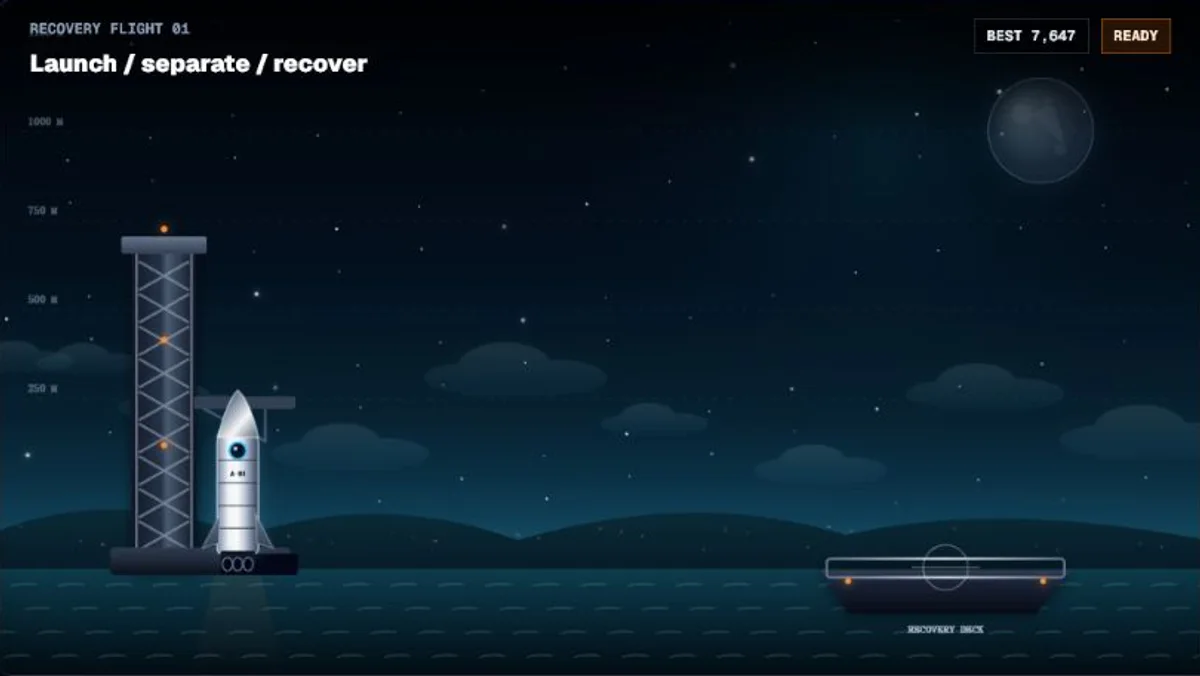
How the launch, stage separation, flight camera, fuel model, landing thresholds, and difficulty tuning work in the site's original rocket game.
Research method
The research rules I use to turn retail goods, vehicles, property, infrastructure, and fictional mega-projects into understandable game prices.
Start here
These pages explain who runs the site, where the numbers come from, and how published material is checked. They are kept separate from the fictional game balance.
Why the site exists, who maintains it, and what makes the games independent.
Read guideThe source hierarchy, rounding rules, and fictional assumptions behind the item values.
Read guideHow first-hand articles are written, reviewed, updated, sourced, and corrected.
Read guide